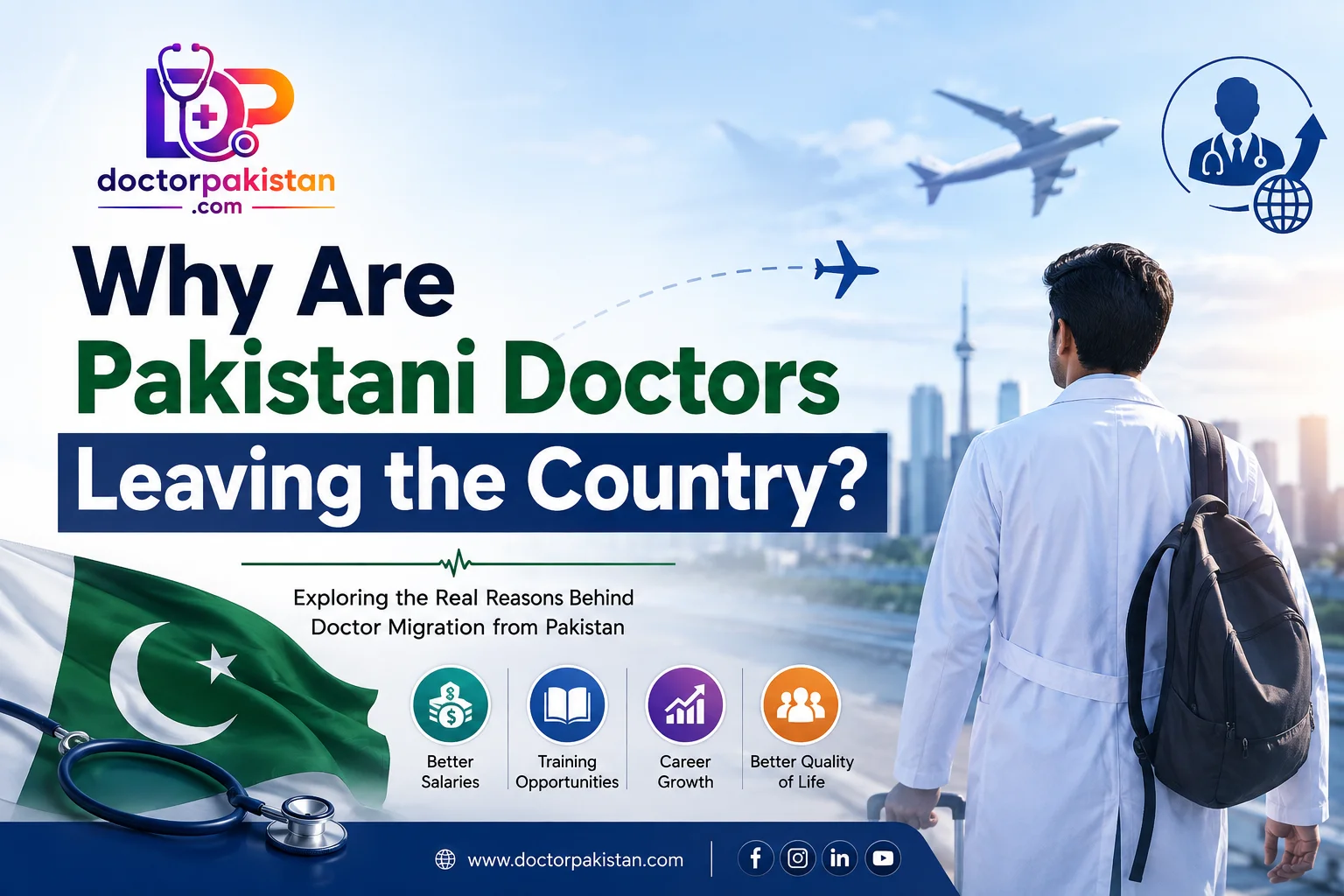
Why Are Pakistani Doctors Leaving the Country?
Pakistan has produced thousands of qualified doctors who work in hospitals, clinics, medical colleges, research institutions, and healthcare organizations. Pakistani doctors are also working successfully in countries such as the United Kingdom, United States, Canada, Australia, and Gulf countries. However, the increasing movement of doctors from Pakistan to other countries has become an important issue for the country's healthcare system.
This trend is commonly described as doctor migration or medical brain drain. Doctors may decide to leave Pakistan after completing MBBS, internship, residency, or postgraduate training. Their reasons are usually not limited to money. Better career opportunities, advanced medical training, improved working conditions, professional recognition, job security, and quality of life can all influence their decision.
Understanding why doctors leave Pakistan is important because it can help policymakers, hospitals, and medical institutions identify ways to retain skilled healthcare professionals and improve the country's healthcare system.
What Is Doctor Migration?
Doctor migration refers to the movement of qualified medical professionals from their home country to another country for employment, education, specialist training, research, or long-term career opportunities.
For Pakistani doctors, migration may involve completing postgraduate training abroad, obtaining a medical license in another country, or accepting a permanent healthcare position. Countries with developed healthcare systems often attract doctors because they provide structured training programs, modern facilities, competitive salaries, and opportunities for professional development.
Doctor migration is not necessarily permanent in every case. Some doctors return to Pakistan after completing their education or gaining international experience, while others establish long-term careers abroad.
Why Is Doctor Migration Important?
Doctor migration can have a significant effect on Pakistan's healthcare system. When trained and experienced doctors leave, hospitals may experience shortages of specialists and senior medical professionals.
The problem can be more noticeable in rural and underserved areas where doctors are already difficult to recruit and retain. A shortage of specialists can increase waiting times and place additional pressure on the doctors who remain in the country.
However, Pakistani doctors living abroad can also contribute positively through research collaboration, knowledge sharing, medical training, charitable activities, investment, and international professional networks.
Major Reasons Pakistani Doctors Are Leaving Pakistan
1. Low Salaries and Financial Pressure
One of the most commonly discussed reasons for doctor migration is the difference in income between Pakistan and developed healthcare markets.
Becoming a doctor requires many years of education, clinical training, examinations, and professional development. After completing medical school, doctors often spend additional years in residency or postgraduate training before becoming specialists.
Some doctors feel that their salaries in Pakistan do not adequately reflect their education, responsibilities, workload, and level of professional expertise. Overseas positions may offer higher salaries, better benefits, pensions, insurance, and other employment advantages.
Salary Is Not the Only Factor
Money is important, but it is rarely the only reason doctors move abroad. Many doctors consider their overall career, working environment, training opportunities, family needs, and long-term financial stability before making such a decision.
A higher salary combined with better working conditions can make international employment particularly attractive.
2. Better Postgraduate Training Opportunities
Postgraduate medical education is another major factor behind doctor migration.
Many young Pakistani doctors want to specialize in fields such as cardiology, surgery, radiology, dermatology, pediatrics, oncology, anesthesiology, psychiatry, and internal medicine.
International healthcare systems often offer structured residency and fellowship programs with clearly defined training pathways. Doctors may receive supervised clinical experience, access to advanced technology, research opportunities, and exposure to internationally recognized treatment protocols.
For doctors who want internationally recognized qualifications and specialized experience, overseas training can be an attractive option.
3. Heavy Workload and Long Working Hours
Doctors can face demanding schedules, particularly during internship, residency, and the early stages of their careers. Busy hospitals may require doctors to manage large numbers of patients while working long shifts.
Emergency departments can be especially challenging because doctors must make quick decisions while dealing with serious and sometimes unpredictable cases.
Importance of Work-Life Balance
Long working hours can reduce the amount of time doctors have for their families, personal interests, education, and rest. Continuous professional pressure may also contribute to dissatisfaction with the workplace.
Some doctors therefore prefer healthcare systems where shifts are more structured, staffing levels are better, and working hours are more predictable.
4. Limited Healthcare Resources
Doctors need appropriate medical equipment, medicines, diagnostic facilities, trained staff, and specialist support to provide effective patient care.
In some healthcare facilities, shortages of equipment, medicines, beds, diagnostic services, or specialist support can make clinical work more difficult.
Access to Modern Medical Technology
Hospitals in developed countries may provide greater access to advanced diagnostic machines, modern operating rooms, electronic medical records, specialized treatment centers, and multidisciplinary healthcare teams.
Doctors who want to develop their skills using modern technology may therefore find international hospitals more attractive.
5. Better Career Growth
Career progression is an important consideration for medical professionals.
Doctors may want opportunities to develop specialist skills, conduct research, publish academic papers, attend conferences, teach medical students, and move into leadership positions.
Professional Development Opportunities
When doctors believe that career progression is limited or uncertain, they may consider opportunities abroad. International healthcare systems can offer multiple career paths in clinical medicine, medical research, teaching, public health, administration, and healthcare management.
A clear career pathway can strongly influence whether a doctor decides to stay in Pakistan or seek opportunities elsewhere.
6. Workplace Environment
The workplace environment can have a major effect on job satisfaction.
Doctors may experience administrative pressure, staff shortages, excessive paperwork, communication difficulties, and challenges related to hospital management.
Importance of Professional Support
Doctors generally prefer workplaces where their professional decisions are respected, responsibilities are clearly defined, colleagues cooperate, and management provides appropriate support.
A supportive workplace can improve morale and reduce professional stress. If doctors repeatedly experience an unsupportive environment, they may become more interested in international opportunities.
7. High Patient Load
Pakistan has a large population and significant healthcare needs. Public hospitals, emergency departments, and busy clinics may receive large numbers of patients every day.
Pressure on Doctors
Doctors may sometimes have to examine many patients within a limited period. A high patient load can increase stress and fatigue and make it difficult to provide lengthy consultations.
Effect on Patient Care
When doctors are under constant pressure, maintaining sufficient time and attention for every patient can become challenging. Better staffing, improved hospital organization, and stronger primary healthcare services could help reduce this pressure.
8. Safety and Security Concerns
Safety is another factor that can influence doctors' decisions about where they want to work.
Doctors working in emergency departments and crowded hospitals may encounter difficult situations involving patients or attendants. Verbal conflicts, workplace pressure, and concerns about personal security can affect professional satisfaction.
A safe workplace allows doctors to focus more effectively on patient care and reduces unnecessary stress.
9. Better Quality of Life
Doctors also consider their personal lives when deciding whether to move abroad.
Quality of life can include housing, transportation, education, healthcare, working hours, financial stability, public services, family security, and personal time.
For married doctors and those with children, education and future opportunities for their families can become important considerations. A country offering better long-term living conditions may therefore appear more attractive even if salary is not the only motivation.
10. International Professional Experience
Working abroad can expose Pakistani doctors to different healthcare systems, treatment approaches, technologies, and professional cultures.
Doctors may work with multidisciplinary teams and treat patients from diverse backgrounds. This experience can improve clinical skills, communication abilities, research knowledge, and professional confidence.
International experience can also help doctors build networks with healthcare professionals from different countries and create opportunities in medical research, academic medicine, healthcare leadership, and international organizations.
Impact of Pakistani Doctors Leaving the Country
The migration of doctors can create several challenges for Pakistan's healthcare system.
Effect on Hospitals
When experienced doctors leave, hospitals may lose professionals who provide specialist services, teach junior doctors, supervise residents, and contribute to patient care.
Replacing experienced medical professionals can take considerable time because specialist training requires years of education and clinical experience.
Impact on Rural Areas
Rural and underserved areas can be particularly affected. These regions may already face difficulties attracting specialist doctors because of limited facilities, fewer career opportunities, and infrastructure challenges.
If more doctors move abroad or concentrate in major cities, healthcare inequality between urban and rural communities may increase.
Effect on Medical Education
Senior doctors play an important role in teaching medical students and training postgraduate residents.
When experienced doctors leave teaching hospitals, medical colleges may lose valuable mentors, supervisors, researchers, and educators. This can affect the quality and capacity of medical training.
How Can Pakistan Reduce Doctor Brain Drain?
Pakistan may not be able to stop every doctor from seeking international opportunities. Instead, the country can focus on improving the conditions that encourage doctors to stay.
Improve Doctors' Salaries and Benefits
Competitive salaries and better employment benefits can make medical careers more financially sustainable. Performance-based incentives, health insurance, retirement benefits, and other professional benefits can also improve job satisfaction.
Improve Working Conditions
Hospitals can reduce unnecessary pressure through better staffing, reasonable workloads, safer workplaces, organized shifts, and improved administrative systems.
Expand Postgraduate Training
Increasing the availability and quality of residency, fellowship, and specialist training programs can help doctors achieve their professional goals within Pakistan.
Invest in Healthcare Infrastructure
Modern equipment, reliable medicines, diagnostic facilities, updated hospitals, and improved healthcare technology can help doctors provide better patient care.
Support Medical Research
Research funding, academic opportunities, conferences, publications, and collaboration with international institutions can encourage doctors interested in research and education to build their careers in Pakistan.
Create Clear Career Pathways
Transparent promotion systems and clear professional development opportunities can give doctors confidence about their future. Doctors should be able to understand how they can progress from junior positions to senior clinical, academic, or leadership roles.
Is Doctor Migration Bad for Pakistan?
Doctor migration has both challenges and potential benefits.
The biggest concern is the loss of trained healthcare professionals. Pakistan invests significant resources in medical education, and permanent migration can reduce the number of skilled doctors available to serve local communities.
However, Pakistani doctors abroad can also contribute through research partnerships, knowledge exchange, medical training, investment, charitable healthcare projects, and professional collaborations.
Therefore, the goal should not simply be to prevent doctors from leaving. Pakistan should create conditions that make staying and building a successful career more attractive.
Conclusion
The reasons why Pakistani doctors are leaving the country are complex. Low salaries, heavy workloads, limited healthcare resources, postgraduate training opportunities, career growth, workplace conditions, safety concerns, and quality of life can all influence a doctor's decision.
Many doctors who move abroad are looking for better professional and personal opportunities rather than simply abandoning their country. If Pakistan improves healthcare infrastructure, salaries, working conditions, specialist training, research opportunities, and career progression, more doctors may choose to build long-term careers at home.
At the same time, Pakistani doctors working around the world can remain an important source of knowledge, experience, investment, and international collaboration. A stronger connection between doctors inside and outside Pakistan can help turn medical migration into an opportunity for the country's healthcare development.