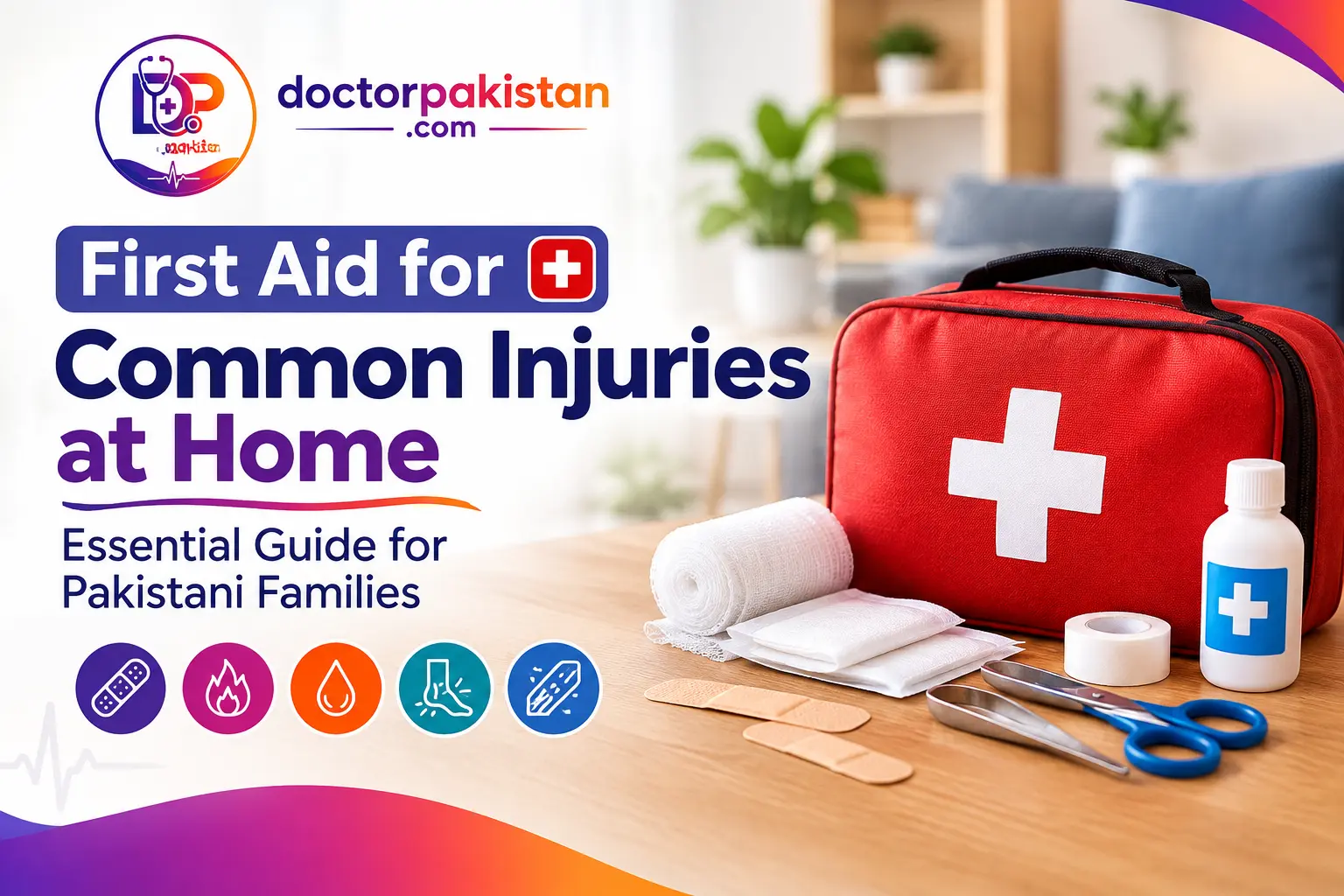
First Aid for Minor Injuries at Home – Complete Guide
Introduction
Minor injuries can happen at home at any time, especially while cooking, cleaning, working, playing, or doing everyday activities. Knowing basic first-aid steps can help provide immediate care while deciding whether professional medical attention is needed.
This guide explains basic first-aid approaches for common minor injuries such as small cuts, minor burns, bruises, sprains, and nosebleeds. First aid is not a replacement for medical treatment, particularly when an injury is severe or symptoms are worsening.
What Is First Aid?
First aid refers to the immediate care given to someone who has been injured or becomes suddenly unwell before professional medical help is available.
The main goals of first aid are to:
- Protect the injured person from further harm
- Control bleeding when possible
- Reduce the risk of infection
- Provide basic support while medical help is arranged
- Recognize situations that require urgent medical attention
- Move away from the source of heat.
- Cool the affected area with cool running water.
- Remove jewelry or tight items near the burned area if they are not stuck to the skin.
- Cover the burn loosely with a clean, non-stick dressing.
- Rest the affected area.
- Apply a cold pack wrapped in a cloth for short periods.
- Avoid placing ice directly on the skin.
- Keep the affected area elevated when practical.
- Resting the injured area
- Applying a cold pack wrapped in cloth
- Elevating the affected limb
- Avoiding activities that increase pain or swelling
- Severe or uncontrolled bleeding
- Difficulty breathing
- Loss of consciousness
- Serious head injury
- Suspected broken bones with significant deformity
- Deep or extensive wounds
- Severe burns
- Serious eye injuries
- Poisoning
- Electrical injuries
- Injuries involving the neck or spine
- Sterile gauze
- Adhesive bandages
- Medical tape
- Antiseptic wipes
- Disposable gloves
- Clean dressings
- Scissors
- Tweezers
- Digital thermometer
- Cold pack
- Safety pins
- Basic first-aid instructions
- Applying toothpaste or butter to burns
- Putting dirty materials directly on wounds
- Removing objects deeply embedded in the body
- Applying ice directly to the skin
- Ignoring severe bleeding
- Giving food or drink to an unconscious person
- Delaying emergency medical care for a serious injury
First Aid for Minor Cuts
For a small cut or wound:
1. Wash your hands before touching the wound. 2. Apply gentle pressure with clean gauze or a clean cloth if there is bleeding. 3. Once bleeding is controlled, gently clean the wound with clean running water. 4. Keep the surrounding skin clean. 5. Cover the wound with a clean dressing or bandage. 6. Change the dressing when it becomes wet or dirty.
Seek medical attention if the wound is deep, heavily contaminated, does not stop bleeding, or shows signs of infection.
First Aid for Minor Burns
For a minor burn:
Avoid applying household substances such as toothpaste, butter, oil, or other products directly to a burn.
Large, deep, or serious burns require urgent medical assessment.
First Aid for Bruises
A bruise can develop when small blood vessels under the skin are damaged after an impact.
For a minor bruise:
Medical evaluation may be needed if the bruise is unusually large, extremely painful, repeatedly occurring without an obvious reason, or associated with other concerning symptoms.
First Aid for Sprains
A sprain occurs when a ligament is stretched or injured, commonly around the ankle, wrist, or knee.
Initial care may include:
Severe pain, significant swelling, inability to use the affected limb, or an obvious deformity may require medical evaluation.
First Aid for Nosebleeds
If someone has a common nosebleed:
1. Sit upright. 2. Lean slightly forward. 3. Pinch the soft part of the nose continuously for several minutes. 4. Breathe through the mouth. 5. Avoid tilting the head backward.
If the bleeding is heavy, lasts for an extended period, follows a significant injury, or repeatedly occurs, seek medical advice.
When Should You Seek Emergency Medical Help?
Some injuries require urgent medical attention rather than home first aid.
Seek emergency medical help for situations such as:
If someone is unconscious, not breathing normally, or experiencing another life-threatening emergency, contact local emergency medical services immediately.
What Should a Home First-Aid Kit Contain?
A basic home first-aid kit may include:
Keep the first-aid kit in an easily accessible but safe location and regularly check expiry dates.
Common First-Aid Mistakes to Avoid
Some common mistakes can make an injury worse. Avoid:
Frequently Asked Questions
Can Minor Cuts Be Treated at Home?
Many small and superficial cuts can receive basic first aid at home. However, deep wounds, persistent bleeding, or signs of infection should be assessed by a healthcare professional.
Should Ice Be Placed Directly on an Injury?
No. Ice or a cold pack should generally be wrapped in a cloth before being applied to the skin.
What Should I Do for a Minor Burn?
Cool the affected area with cool running water and protect it with a clean, non-stick covering. Seek medical attention for serious or extensive burns.
When Should I Go to a Hospital After an Injury?
Go for medical assessment when the injury is severe, bleeding cannot be controlled, there is loss of consciousness, breathing difficulty, suspected fracture, severe burn, or another serious symptom.
Conclusion
Basic first-aid knowledge can help Pakistani families respond appropriately to minor injuries at home. Keeping a properly stocked first-aid kit and knowing when professional medical care is necessary can be useful for everyday emergencies.
For serious injuries or symptoms, do not rely only on home treatment. Seek appropriate medical care from a qualified healthcare professional or emergency service.