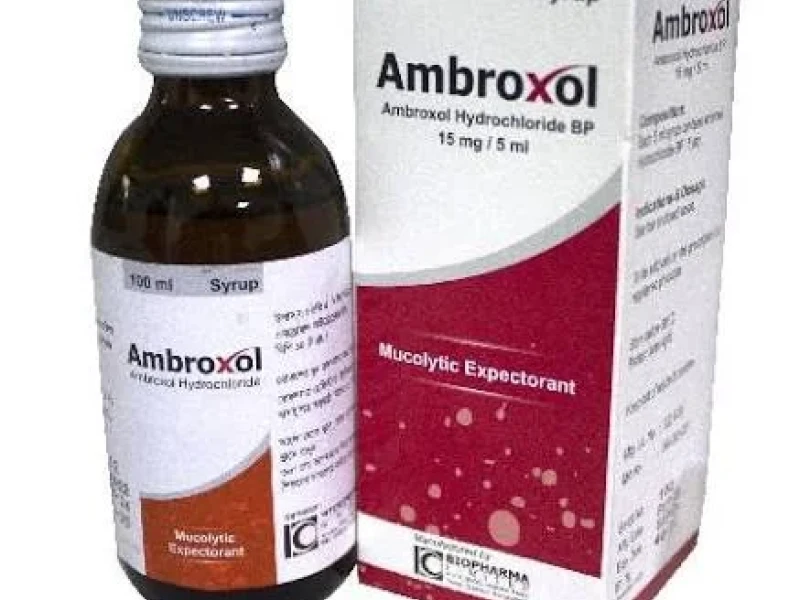
Description
Ambroxol Syrup is a mucolytic medicine commonly used to help loosen and clear thick mucus or phlegm from the respiratory tract. Its active ingredient, ambroxol hydrochloride, works by making sticky and thick mucus thinner and easier to cough out. It is mainly helpful for people who have a wet or productive cough associated with excessive mucus.
When mucus becomes thick, it can remain inside the airways and make breathing uncomfortable. A person may feel congestion in the chest, have a heavy feeling while breathing, or experience difficulty bringing phlegm out. Ambroxol helps improve the movement of mucus through the airways, making it easier for the body to remove respiratory secretions naturally.
Unlike cough suppressants, Ambroxol does not mainly work by stopping the cough reflex. Instead, it supports the body's natural mucus-clearing process. This makes it more appropriate for a chesty cough in which mucus or phlegm is present. It may be used in certain respiratory conditions such as bronchitis and other illnesses associated with abnormal or excessive mucus production.
Ambroxol may also improve mucociliary clearance, which is the natural process through which tiny hair-like structures in the respiratory tract move mucus toward the throat. Once the mucus becomes less thick, coughing can help remove it more effectively.
Ambroxol Syrup is available in different strengths and brands. A commonly available formulation contains 15 mg of ambroxol hydrochloride in 5 mL, but the concentration can vary. Therefore, patients should always check the medicine label before measuring a dose.
Adequate fluid intake may support the mucus-loosening effect of the medicine. However, people who have been advised to restrict fluids because of another medical condition should follow their healthcare professional's instructions.
Although Ambroxol Syrup can be useful for mucus-related coughs, it is not suitable for every type of cough. A dry cough, allergy-related cough, asthma symptoms, acid reflux or other causes may require different treatment. Persistent or worsening cough should be evaluated by a healthcare professional.
In simple terms, Ambroxol Syrup helps thin thick mucus, loosen phlegm and make coughing mucus out easier. It should be used according to the instructions provided by a doctor, pharmacist or the specific product label.
Uses
Ambroxol Syrup is mainly used for respiratory conditions in which thick, sticky mucus or excessive phlegm makes it difficult to clear the airways. It works as a mucolytic by reducing the thickness of mucus and helping the respiratory system remove it more easily.
Productive Cough
One of the common uses of Ambroxol Syrup is a productive or wet cough with thick phlegm. When mucus becomes difficult to bring up, Ambroxol can help make it thinner and easier to expel through coughing.
Bronchitis
Ambroxol may be used during acute bronchitis when the illness causes increased mucus production and chest congestion. By helping loosen bronchial secretions, it may make mucus clearance easier.
Chronic Respiratory Conditions
Some people with chronic respiratory disorders experience excessive or thick mucus. Depending on the specific diagnosis and medicine formulation, Ambroxol may be prescribed to support mucus clearance in these conditions.
Chest Congestion
Ambroxol can help when thick mucus contributes to a congested or heavy feeling in the chest. By reducing mucus thickness, it may make respiratory secretions easier to remove.
Difficulty Clearing Phlegm
People who have difficulty coughing up thick phlegm may sometimes be advised to use a mucolytic such as Ambroxol. The medicine supports the body's natural process of clearing mucus from the respiratory tract.
How It Helps
Ambroxol changes the properties of respiratory mucus, making it less sticky and easier to move. It can also support mucociliary clearance, allowing the respiratory tract to transport mucus toward the throat where it can be expelled.
Ambroxol is therefore different from a traditional cough suppressant. A cough helps remove mucus from the lungs and airways, while Ambroxol helps make that mucus easier to remove.
Important Consideration
Ambroxol should not be taken simply because a person has any type of cough. It is particularly useful when thick mucus or phlegm is involved. A dry cough may have a different cause and may require another type of treatment.
If cough is accompanied by difficulty breathing, severe chest pain, coughing up blood, persistent high fever or rapidly worsening symptoms, medical attention should be obtained rather than relying only on Ambroxol Syrup.
Always follow the recommended dose and check the strength of the syrup because different brands may contain different concentrations of ambroxol.
Side Effects
Ambroxol Syrup is generally well tolerated when used according to the recommended instructions, but like other medicines, it can cause side effects in some people. The severity and type of side effects can vary from person to person.
Common Side Effects
Some people may experience mild digestive problems after taking Ambroxol Syrup. These can include:
- Nausea
- Vomiting
- Stomach discomfort
- Abdominal pain
- Indigestion
- Diarrhea
These effects are usually mild and may improve as the body adjusts to the medicine. However, if they continue for a long time or become severe, a doctor or pharmacist should be consulted.
Changes in Taste
Some people may notice an unusual or altered taste after taking ambroxol. This is generally temporary, but it can be uncomfortable for some patients.
Skin Rash or Itching
Ambroxol can occasionally cause skin reactions such as a rash or itching. A mild rash should be discussed with a healthcare professional, particularly if it continues or spreads.
Allergic Reactions
Rarely, a person may experience a serious allergic or hypersensitivity reaction. Warning signs may include swelling of the face, lips, tongue or throat, difficulty breathing, severe itching or a rapidly developing rash.
If these symptoms occur, urgent medical attention is required.
Serious Skin Reactions
Rare but serious skin reactions have been reported with ambroxol-containing medicines. Signs that require immediate medical assessment include widespread blistering, peeling skin, severe rash, sores around the mouth or eyes, or unusual reactions involving the skin and mucous membranes.
Who Should Take Extra Care?
People with a history of stomach or peptic ulcers should inform their doctor before using Ambroxol. Patients with known allergies to ambroxol or any ingredient in a particular syrup should avoid that product unless a healthcare professional specifically advises otherwise.
Because syrup formulations can contain different inactive ingredients, people with certain allergies or dietary restrictions should carefully check the product information.
When to Seek Medical Help
Stop self-treatment and seek medical advice if side effects become severe or do not improve. Emergency medical help should be obtained if there is difficulty breathing, swelling of the face or throat, severe allergic symptoms, fainting, or a serious skin reaction.
It is also important to remember that some symptoms may be caused by the underlying respiratory illness rather than the medicine itself. For this reason, unusual or worsening symptoms should be assessed by a healthcare professional.
Never increase the dose in an attempt to make the medicine work faster, as taking more than recommended can increase the risk of side effects.
Dosage
The correct Ambroxol Syrup dosage depends on the age of the patient, medical condition and strength of the syrup. Different brands may contain different concentrations, so the dose should always be checked on the product label or confirmed with a doctor or pharmacist.
A commonly available Ambroxol Syrup contains 15 mg of ambroxol hydrochloride per 5 mL. For this strength, some product information provides different doses according to age.
For adults and children over 10 years, a commonly listed dose is 10 mL three times daily during the initial period of treatment. Depending on the specific product, the dose may later be reduced.
For children between 6 and 10 years, some 15 mg/5 mL formulations recommend 5 mL three times daily.
For children between 2 and 5 years, some formulations recommend 2.5 mL three times daily.
However, these doses are not universal for every Ambroxol Syrup. Some products use different schedules, and young children require particular care. Therefore, parents should follow the dosage instructions provided for the exact product being used.
How to Take Ambroxol Syrup
Measure the syrup using the supplied measuring cup or an appropriate medicine-measuring device. Avoid using an ordinary kitchen spoon because its volume can vary considerably.
Shake the bottle if the product instructions specifically recommend shaking before use. Take each dose at the recommended time and do not take extra medicine if symptoms do not improve immediately.
Adequate normal hydration may help support mucus clearance. However, people who have been instructed by their doctor to limit fluid intake should follow that advice.
Missed Dose
If you forget a dose, take it when you remember unless it is nearly time for your next dose. If the next dose is close, skip the missed dose and continue with the regular schedule.
Do not take two doses together to make up for a missed dose.
Overdose
Taking more Ambroxol than recommended may increase the risk of unwanted effects, particularly gastrointestinal symptoms. If someone accidentally takes a significantly larger amount than recommended, medical advice should be obtained.
Children
Children should receive Ambroxol Syrup according to the age-specific instructions for the particular formulation. Very young children should not be given cough medicines without appropriate medical guidance.
Pregnancy and Breastfeeding
Pregnant or breastfeeding women should consult a healthcare professional before using Ambroxol Syrup. The doctor can assess whether the medicine is appropriate based on the individual's condition and stage of pregnancy or breastfeeding.
Important Dosage Advice
Do not copy the dosage from another brand of Ambroxol Syrup because the concentration may be different. Always check whether the bottle contains 15 mg/5 mL, 30 mg/5 mL or another strength.
Ambroxol is mainly intended to help loosen mucus. If the cough is severe, lasts longer than expected, repeatedly returns, or occurs with breathing difficulty, chest pain, blood in sputum or serious fever, medical evaluation is necessary.
This dosage information is provided for general educational purposes. The exact dose should be confirmed from the medicine packaging or prescribed by a qualified healthcare professional.