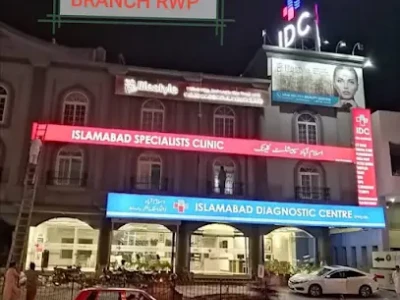
Contact Information
About IDC Lab and Diagnostic Center Mall Road Saddar - Rawalpindi
Islamabad Diagnostic Centre (IDC) Mall Road Saddar is a diagnostic and medical testing facility located at Ground Floor, One The Mall Plaza, opposite AFIC on Mall Road, Saddar, Rawalpindi. It is part of the Islamabad Diagnostic Centre network, which provides laboratory testing and diagnostic imaging services through multiple locations in Rawalpindi and Islamabad.
The Mall Road Saddar branch provides patients with access to a broad range of diagnostic investigations, combining laboratory medicine with radiology and other diagnostic services. The facility is designed to support routine health screening, disease diagnosis, medical monitoring, preventive healthcare, and investigations requested by physicians.
IDC's laboratory services cover several major areas of diagnostic medicine, including hematology, clinical pathology, clinical chemistry, microbiology, PCR and molecular testing, immunology, serology, histopathology, special chemistry, virology, and parasitology. This broad laboratory coverage allows different types of clinical specimens to be evaluated for blood disorders, infections, metabolic conditions, organ function, immune-related conditions, and other medical concerns.
The diagnostic imaging side of IDC provides access to modern imaging modalities. Depending on the service and equipment available at the particular branch, patients may receive X-ray, ultrasound, CT scan, MRI, mammography, fluoroscopy, dental imaging, and other specialized diagnostic examinations. The Mall Road branch is specifically listed by IDC as an operating Rawalpindi location.
Laboratory investigations may include routine blood tests, biochemical profiles, hormone investigations, infectious disease testing, urine examinations, specialized pathology, and molecular investigations. The current branch test menu can vary according to equipment, specimen requirements, and whether a particular specialized investigation is processed at the branch or through another IDC facility.
The centre also supports diagnostic procedures and investigations such as ECG, ECHO, ETT, EMG, EEG, NCS, DEXA scan, spirometry, OPG, CBCT, mammography, fluoroscopy, MRI, CT scan, ultrasound, and X-ray, with availability depending on the branch and appointment requirements. Publicly available listings specifically associate the Mall Road Saddar location with these diagnostic services.
IDC also operates home sample collection services within its network, allowing patients to arrange laboratory sample collection from home where the service is available. The official IDC Rawalpindi locations page lists the Mall Road Saddar branch and provides its current contact information and operating schedule.
The branch is located in Saddar, Rawalpindi, making it accessible to patients from the central Rawalpindi area. According to IDC's official location information, the branch operates 24 hours from Monday through Saturday and from 8:00 AM to 11:00 PM on Sunday. The listed UAN numbers are 051-111-000-432 and 0311-1000-432.
Overall, IDC Mall Road Saddar provides a comprehensive diagnostic setup covering laboratory medicine, radiology, imaging, cardiac investigations, neurodiagnostic testing, and other specialized diagnostic services. Patients should confirm the availability, preparation requirements, fees, and reporting time of a specific test before visiting.
Tests & Services Offered
Laboratory Testing
IDC Mall Road Saddar provides access to a broad range of laboratory investigations covering routine and specialized diagnostic requirements. The IDC laboratory network includes hematology, clinical pathology, chemistry, microbiology, PCR, immunology, histopathology, virology, parasitology, and special chemistry.
Hematology Tests
Hematology investigations evaluate blood cells and related parameters. These tests can assist in the assessment of anemia, infections, inflammation, platelet abnormalities, and other blood-related conditions.
Complete Blood Count (CBC)
CBC is a routine blood investigation used to evaluate red blood cells, white blood cells, hemoglobin, hematocrit, and platelets. It may be requested during routine screening or when investigating symptoms such as weakness, fever, infection, or suspected blood disorders.
Clinical Chemistry
Clinical chemistry testing evaluates biochemical substances in blood and other specimens. These investigations can support assessment of metabolic health, organ function, electrolyte balance, and other clinical conditions.
Liver Function Tests
Liver-related biochemical investigations help evaluate liver function and may be used for diagnosis and monitoring of liver conditions. Individual liver enzymes and related parameters can be tested according to the requested profile.
Kidney Function Tests
Renal function investigations assess biochemical markers associated with kidney health. These tests may be requested for routine screening, monitoring, or evaluation of suspected kidney disorders.
Blood Glucose Testing
Glucose investigations are used for diabetes screening, diagnosis, and monitoring. Depending on the doctor's recommendation, testing may include fasting, random, or longer-term blood sugar assessment.
Lipid Profile
Lipid testing measures cholesterol and triglyceride-related parameters and can form part of cardiovascular risk assessment and routine health screening.
Hormonal Testing
Hormone investigations can support the evaluation of endocrine and reproductive conditions. The available tests may include selected reproductive, metabolic, thyroid, and other hormone profiles.
Thyroid Function Tests
Thyroid investigations are used to assess thyroid hormone function and may assist in the evaluation of hypothyroidism, hyperthyroidism, thyroid disorders, and related symptoms.
Microbiology
Microbiology services support the detection and investigation of microorganisms responsible for infectious diseases. Depending on the investigation, testing may involve clinical specimens and culture or other laboratory techniques.
Microbiological Culture and Sensitivity
Culture and sensitivity testing may be used to identify microorganisms and assess their response to selected antimicrobial agents when clinically appropriate.
PCR and Molecular Testing
IDC provides molecular diagnostic services including PCR-based testing. Molecular investigations can detect specific genetic material and are used for selected infectious diseases and other specialized diagnostic applications.
Immunology and Serology
Immunological and serological investigations evaluate antibodies, antigens, and other immune-related markers. These tests can support the investigation of infections, autoimmune conditions, and other clinical disorders.
Histopathology
Histopathology involves laboratory examination of tissue specimens. It can help identify abnormal cellular and tissue changes and is an important part of diagnosis for many diseases.
Clinical Pathology
Clinical pathology services involve laboratory examination of blood, urine, and other clinical specimens. They support routine diagnosis, screening, disease monitoring, and follow-up care.
Urine Testing
Urine investigations can assess urinary and kidney-related health and may provide information about infection, glucose, protein, blood, and other abnormalities.
X-Ray
Digital X-ray services are available within the IDC diagnostic network and may be used for chest, bones, joints, spine, and other anatomical areas according to clinical requirements.
Ultrasound
Ultrasound uses sound waves to create real-time images of internal organs and tissues. Depending on the examination, abdominal, pelvic, obstetric, thyroid, soft-tissue, and other ultrasound studies may be performed.
CT Scan
Computed tomography provides detailed cross-sectional images of the body and can support evaluation of the head, chest, abdomen, pelvis, bones, trauma, and other clinical conditions.
MRI
Magnetic resonance imaging provides detailed images of soft tissues and other body structures. MRI may be used for examinations of the brain, spine, joints, muscles, and other areas.
Mammography
Mammography is specialized breast imaging used for breast evaluation and screening when clinically indicated and available at the relevant IDC facility.
Fluoroscopy
Fluoroscopy provides moving X-ray images and may be used for selected contrast examinations and specialized diagnostic procedures.
OPG
Orthopantomography, or OPG, provides panoramic dental and jaw imaging. It can assist dentists and oral healthcare professionals in evaluating teeth, jaws, and surrounding structures.
CBCT
Cone Beam Computed Tomography provides three-dimensional imaging, particularly useful in dental and maxillofacial assessment and selected specialized imaging applications.
ECG
Electrocardiography records the electrical activity of the heart and can assist in evaluating rhythm and other cardiac findings.
ECHO
Echocardiography uses ultrasound to produce images of the heart and can help assess cardiac structure and function.
ETT
Exercise Tolerance Testing, or ETT, monitors cardiac response during controlled physical activity and may be used as part of selected cardiac assessments.
EEG
Electroencephalography records electrical activity of the brain and may be used in the evaluation of selected neurological conditions.
EMG
Electromyography assesses electrical activity associated with muscles and can support evaluation of certain neuromuscular disorders.
NCS
Nerve Conduction Studies evaluate the function of peripheral nerves and may help investigate symptoms such as numbness, weakness, tingling, or suspected nerve disorders.
DEXA Scan
DEXA scanning measures bone mineral density and is commonly used for assessment of bone health and osteoporosis risk.
Spirometry
Spirometry measures lung function and can support the assessment of breathing problems and selected respiratory conditions.
Home Sample Collection
IDC provides home sample collection through its diagnostic network where available. Patients can arrange laboratory specimen collection without necessarily visiting a branch for every routine laboratory investigation.
Diagnostic Reporting
Laboratory and imaging investigations are reported by relevant diagnostic professionals. Reports can support physicians in diagnosis, treatment planning, monitoring, and follow-up.
Specialized Diagnostic Services
IDC also provides access to specialized investigations through its broader diagnostic network. Some advanced tests may be processed at designated IDC facilities or through specialized laboratory collaborations, so patients should confirm the exact location and availability before submitting a sample.
Health Screening
The diagnostic centre can support preventive health screening through laboratory investigations, imaging, cardiac tests, and other diagnostic assessments. The appropriate screening tests depend on age, symptoms, medical history, and physician recommendations.
Patient Preparation and Test Information
Preparation requirements differ between tests. Some laboratory investigations may require fasting, while imaging examinations may require specific preparation. Patients should confirm preparation instructions, current fees, appointment requirements, and reporting times before undergoing a test.


