Contact Information
About Shalamar Hospital Laboratories
About Shalamar Hospital Laboratories
Shalamar Hospital Laboratories is the clinical laboratory and pathology service of Shalamar Hospital in Lahore. The laboratory provides diagnostic testing support for indoor, outdoor, and emergency patients and operates across multiple specialized pathology sections. Its services cover routine investigations as well as specialized diagnostic testing.
Pathology and Laboratory Services
The laboratory brings together several areas of pathology, including hematology, chemical pathology, immunology, histopathology and cytology, microbiology, molecular biology, and transfusion medicine. This allows patients to access a broad range of diagnostic investigations through an integrated hospital laboratory service.
Hematology Services
The hematology section performs a range of blood-related investigations, including complete blood counts, ESR, coagulation testing, and specialized hematology procedures. The section also supports bone marrow aspiration and trephine biopsy investigations.
Chemical Pathology
Chemical pathology provides biochemical testing for routine, urgent, and specialized clinical requirements. The department uses automated laboratory systems for a variety of biochemical investigations and also supports specialized testing such as stone analysis.
Immunology and Special Chemistry
The immunology section provides testing related to special chemistry, endocrinology, tumor markers, and immunological investigations. Testing may be performed using automated immunoassay technologies to support screening, diagnosis, and patient monitoring.
Histopathology and Cytology
Histopathology services support the examination of tissue and surgical specimens. The department also provides cytology services, including Fine Needle Aspiration Cytology (FNAC), along with specialized staining and immunohistochemistry services for diagnostic evaluation.
Microbiology Laboratory
The microbiology section investigates infectious conditions by examining clinical samples for bacteria, fungi, parasites, and other microorganisms. The department performs culture, identification, staining, and antimicrobial susceptibility testing where appropriate.
Molecular Biology
The molecular biology section provides PCR-based diagnostic testing. According to the hospital, its molecular services include testing for conditions such as Hepatitis B, Hepatitis C, Mycobacterium tuberculosis, and COVID-19.
Transfusion Medicine and Blood Bank
The transfusion medicine section supports blood grouping, antibody screening, donor screening, compatibility testing, and preparation and storage of blood components. Blood bank services are available to support the hospital's clinical and emergency requirements.
Quality and Diagnostic Support
Shalamar Hospital states that its laboratory follows internal and external quality-control procedures. The pathology laboratory has also participated in external proficiency testing through the College of American Pathologists (CAP).
Laboratory Reports
Patients can access laboratory reports through the hospital's online laboratory results system, providing convenient access to diagnostic information after testing.
24/7 Laboratory Support
The hospital states that laboratory services are available around the clock for patients, including indoor, outdoor, and emergency cases. Availability of individual tests may depend on the nature of the investigation and laboratory section.
Patient-Centered Diagnostic Care
The laboratory works alongside hospital physicians and clinical departments to provide diagnostic information that can support disease diagnosis, treatment planning, and follow-up care.
Location
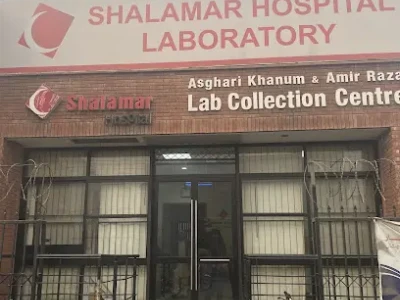
Shalamar Hospital Laboratories is located at Shalamar Hospital, Shalimar Link Road, Lahore. The facility is associated with the hospital's main pathology and diagnostic services.
Tests & Services Offered
Hematology Tests
Complete Blood Count (CBC), ESR, coagulation profile, and other hematology investigations are available through the hematology section.
Bone Marrow Investigations
Bone marrow aspiration and trephine biopsy services are available for appropriate clinical indications and diagnostic evaluation.
Hemoglobin Variant Analysis
Specialized hemoglobin analysis is performed using high-performance liquid chromatography (HPLC) technology for the evaluation of hemoglobin variants and related conditions.
Chemical Pathology Tests
The chemical pathology section provides a broad range of biochemical investigations for routine, urgent, and specialized patient requirements.
Blood Glucose Testing
Blood glucose investigations are included among the laboratory's biochemical testing services and may be used for diabetes screening, diagnosis, and monitoring.
Liver Function Testing
Biochemical investigations can be used to assess liver-related health and support the diagnosis and monitoring of liver conditions.
Kidney and Renal Function Tests
Renal and biochemical investigations may include tests used to evaluate kidney function and monitor patients with renal or metabolic conditions.
Lipid Profile
Cholesterol and other lipid-related investigations can be performed as part of cardiovascular and routine health assessment.
Thyroid and Endocrine Testing
The immunology and special chemistry section provides endocrine-related investigations, including thyroid testing and other hormone-related diagnostic investigations.
Tumor Marker Testing
The immunology section provides testing for selected tumor markers that may support clinical assessment and monitoring when requested by a physician.
Immunology and Serology
The laboratory provides qualitative and quantitative immunological investigations using automated and specialized testing methods.
Histopathology
Tissue and surgical specimens can be examined through histopathology for diagnostic assessment of abnormal or diseased tissues.
Cytology Services
Cytology investigations are available for the examination of cellular material, including Fine Needle Aspiration Cytology (FNAC).
Immunohistochemistry
Immunohistochemistry services support tumor diagnosis, classification, and confirmation through specialized antibody-based testing.
Microbiology Testing
Microbiology services include investigations for bacterial, fungal, and parasitic infections using appropriate clinical specimens.
Culture and Sensitivity Testing
Culture and antimicrobial susceptibility testing are available for selected clinical samples to help identify infectious organisms and guide appropriate treatment.
Urine, Stool and Body Fluid Analysis
The microbiology laboratory performs routine urine and stool analysis along with examination of selected biological fluids.
Blood Grouping and Compatibility Testing
Transfusion medicine services include blood grouping, antibody screening, and compatibility testing for patients requiring blood or blood components.
Donor Screening
Blood donors can undergo screening for transfusion-transmitted infections, including Hepatitis B, Hepatitis C, HIV, syphilis, and malaria.
Blood Component Services
The blood bank supports preparation and appropriate storage of blood components for clinical use.
Molecular PCR Testing
PCR-based molecular testing is available for selected infectious diseases and includes testing for Hepatitis B, Hepatitis C, Mycobacterium tuberculosis, and COVID-19.
Routine Diagnostic Testing
The laboratory supports routine and specialized investigations for hospital, outpatient, and emergency patients across multiple pathology disciplines.
Laboratory Sample Processing
Clinical samples are collected and processed according to laboratory procedures, with trained technologists and technicians involved in diagnostic testing and quality-control processes.
Laboratory Reports
Patients receive laboratory reports after completion of testing, with the hospital also providing an online system for convenient access to laboratory results.
Follow-Up Testing
Repeat laboratory investigations can be performed when requested by the treating physician to monitor treatment response, disease progression, or ongoing health conditions.
Patient Preparation Guidance
Certain tests may require fasting, medication-related instructions, specific sample timing, or other preparation. Patients should follow the preparation instructions provided by the laboratory or treating physician.