Contact Information
About The Kidney Center (Lithotripsy), Saad Medical Complex
The Kidney Center (Lithotripsy), Saad Medical Complex
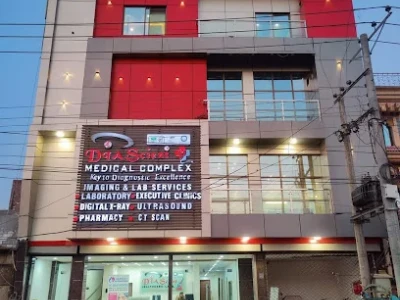
The Kidney Center (Lithotripsy) is a specialized urology and kidney-care facility located on the 3rd floor of Saad Medical Complex in Block C, People's Colony No. 1, Faisalabad, Punjab, Pakistan. The center focuses primarily on the evaluation and treatment of kidney stones and other urological conditions, with lithotripsy being one of its key specialized services. ([turn0search0])
The center provides urological care for patients experiencing kidney and urinary tract problems. Kidney stones can cause severe pain, blood in the urine, urinary obstruction and other complications, and specialist assessment is important for determining the appropriate treatment approach.
Lithotripsy is a specialized treatment used to break kidney or urinary stones into smaller fragments so that they can pass through the urinary tract or be removed through an appropriate procedure. The Kidney Center is specifically identified in public listings as a facility providing lithotripsy services for kidney-stone treatment. ([turn0search2])
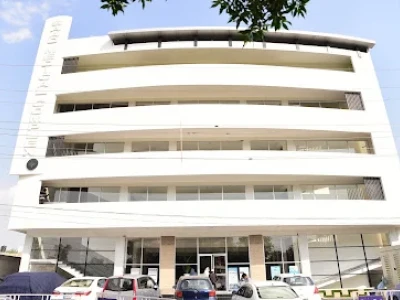
The center is situated within Saad Medical Complex, a healthcare facility on Jaranwala Road in People's Colony No. 1, Faisalabad. Public listings give the location as the 3rd floor of Saad Medical Complex, with 120-C Jaranwala Road also associated with the complex address. ([turn0search4])
In addition to lithotripsy, the center is described as providing urological care and diagnostic evaluation for kidney-related conditions. The appropriate treatment depends on the size, location and type of stone, the patient's symptoms and overall medical condition.
Patients may be assessed by urology specialists before treatment. Diagnostic evaluation can involve clinical examination and appropriate imaging or laboratory investigations to determine the location of a stone and evaluate the urinary system.
The center currently has public listings showing operating hours from approximately 9:00 AM to 9:00 PM, Monday through Saturday. The publicly listed landline number is 041-8734817. Another directory lists 0300-1882007, so patients should confirm the preferred contact number before visiting. ([turn0search0]turn0search4)
The Kidney Center is best categorized as a specialized urology and lithotripsy center rather than a general diagnostic laboratory. Its main healthcare focus is kidney stones, urinary tract disorders and related urological treatment.
Address: 3rd Floor, Saad Medical Complex, Block C, People's Colony No. 1, Faisalabad, Punjab, Pakistan
Associated Road: 120-C Jaranwala Road, Faisalabad
Phone: 041-8734817
Alternate Listed Contact: 0300-1882007
Category: Urology Clinic / Kidney Stone Treatment Center / Lithotripsy Center
Hours: Approximately 9:00 AM–9:00 PM, Monday–Saturday
Tests & Services Offered
Kidney Stone Evaluation
The center provides specialist evaluation for patients suspected of having kidney or urinary tract stones. Assessment helps determine the location, size and possible impact of a stone before selecting an appropriate treatment.
Lithotripsy
Lithotripsy is the primary specialized service associated with The Kidney Center. The treatment breaks kidney or urinary stones into smaller fragments so they can pass naturally or be managed through further urological treatment. ([turn0search2])
ESWL
Extracorporeal Shock Wave Lithotripsy (ESWL) is a non-invasive stone-treatment technique that uses focused shock waves to fragment suitable kidney or urinary stones. The suitability of ESWL depends on factors such as stone size, location and patient condition.
Urology Consultation
Urology consultation supports the diagnosis and management of conditions affecting the kidneys, ureters, bladder and urinary system. A urologist can recommend appropriate investigations and treatment based on the patient's symptoms.
Kidney Stone Treatment
The center specializes in kidney-stone management. Treatment options depend on the individual case and may include lithotripsy or other urological procedures when clinically indicated.
Urinary Tract Assessment
Patients with urinary symptoms can undergo specialist assessment to identify possible stones, obstruction or other urological problems.
Kidney Function Assessment
Patients with kidney-related problems may require laboratory investigations to assess renal function. Tests such as serum creatinine and urea may be requested according to the physician's clinical assessment.
Urine Examination
Urinalysis can help evaluate blood in the urine, urinary infection and other abnormalities that may be relevant in patients with urinary symptoms or kidney stones.
Urine Culture
When urinary infection is suspected, a urine culture may be recommended to identify microorganisms and guide appropriate treatment. Availability should be confirmed with the center.
Ultrasound Assessment
Ultrasound may be used to evaluate the kidneys and urinary tract and can help identify certain stones, urinary obstruction or changes in the urinary system. Specific imaging availability should be confirmed.
KUB Imaging
Kidney-Ureter-Bladder (KUB) imaging may be recommended for selected patients to assess the urinary tract and identify radiopaque stones.
CT Evaluation for Kidney Stones
Non-contrast CT of the urinary tract can provide detailed information about kidney and ureteric stones and may be recommended when clinically appropriate. Patients should confirm whether this imaging is performed at the center or through referral.
Pre-Treatment Assessment
Before lithotripsy or another urological procedure, the patient may undergo clinical evaluation and appropriate laboratory or imaging investigations. The required assessment depends on the planned treatment.
Post-Lithotripsy Follow-up
Follow-up after lithotripsy can help determine whether stone fragments have passed and whether additional treatment is required. Imaging or urine investigations may be recommended according to the patient's condition.
Stone Fragment Assessment
Fragments produced after stone treatment may be collected for analysis in selected cases. Stone composition can provide useful information for future prevention and dietary or medical management.
Ureteric Stone Management
The center's urological services can support assessment of stones located in the ureter. Treatment depends on stone size, location, obstruction and the patient's clinical condition.
Renal Stone Management
Kidney stones can be evaluated for appropriate treatment based on their number, size and location. Lithotripsy may be considered for suitable stones.
Urinary Obstruction Assessment
Patients with suspected urinary obstruction can undergo specialist evaluation and appropriate diagnostic investigations to determine the cause and severity of the obstruction.
Urological Treatment Planning
The urologist can review clinical findings, laboratory results and imaging studies to determine the most appropriate treatment approach for each patient.
Specialist Follow-up
Follow-up consultations allow the urologist to monitor recovery, review imaging or laboratory results and determine whether further treatment is necessary.
Important Note
Publicly available sources clearly identify lithotripsy and urological/kidney-stone care as the main services of The Kidney Center. A complete official list of laboratory tests, imaging facilities and specific procedures was not available in the sources reviewed. Individual tests, ESWL suitability, procedure fees, imaging availability and doctor schedules should therefore be confirmed directly with the center before visiting.