Contact Information
About SID - Secured IoT Devices Lab - UET Peshawar
SID - Secured IoT Devices Lab - UET Peshawar is a specialized research and laboratory facility associated with the University of Engineering & Technology (UET) Peshawar, focusing on the security, reliability, and development of Internet of Things (IoT) devices and systems.
The Internet of Things connects physical devices, sensors, embedded systems, and other smart technologies to networks and digital platforms. As these devices become increasingly common in homes, industries, healthcare, transportation, agriculture, and smart infrastructure, protecting them from unauthorized access and cyber threats has become an important area of research.
The Secured IoT Devices Lab provides an environment for research, experimentation, testing, and development related to IoT security. Such a laboratory can support students, researchers, and technical professionals working on secure embedded devices, connected sensors, communication systems, and IoT-based applications.
A major area of interest in IoT security is the identification of vulnerabilities in connected devices. IoT devices often have limited computing resources and may communicate through wireless or network-based technologies, making security testing an important part of their development. Laboratory-based experimentation can help researchers study potential weaknesses and develop improved security mechanisms.
The lab can also support research into secure communication between IoT devices and other network components. Protecting data while it is transmitted between sensors, devices, gateways, and servers is essential for maintaining confidentiality and preventing unauthorized modification.
Another important aspect of the lab is embedded-device security. Many IoT systems are built around microcontrollers, sensors, development boards, and specialized hardware. Security research in this area can involve examining device configurations, authentication mechanisms, firmware behavior, access controls, and other technical characteristics.
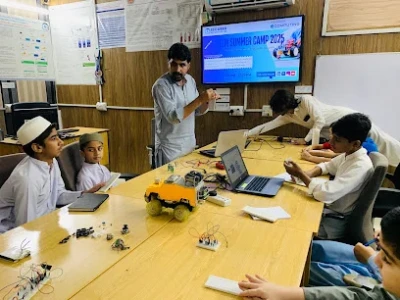
The research environment at SID can also contribute to academic projects and innovation. Students and researchers can use laboratory facilities to develop prototypes, conduct experiments, evaluate security concepts, and test IoT solutions under controlled conditions.
IoT security research is relevant to a wide range of applications, including smart homes, industrial automation, healthcare monitoring, environmental sensing, agriculture, energy systems, and smart-city technologies. By focusing on secure IoT development, the laboratory can contribute to building connected systems that are more resilient against security risks.
SID - Secured IoT Devices Lab - UET Peshawar is therefore particularly relevant to students, researchers, and professionals interested in IoT security, embedded systems, cybersecurity, wireless communication, hardware security, and secure smart-device development.
The laboratory's exact current research projects, equipment, testing capabilities, and available facilities may vary over time and should be confirmed through UET Peshawar or the laboratory's official information.
Tests & Services Offered
SID - Secured IoT Devices Lab - UET Peshawar focuses primarily on research, experimentation, and technical testing related to Internet of Things devices and their security. Unlike a conventional medical or commercial diagnostic laboratory, its services are centered on IoT devices, embedded systems, cybersecurity, and connected technologies.
IoT Device Security Testing:
Security testing can be used to evaluate connected devices and identify potential weaknesses in their hardware, software, communication, or access-control mechanisms.
Embedded System Security:
The laboratory's research scope can include security assessment of embedded devices, microcontrollers, sensors, and other hardware used in IoT systems.
IoT Vulnerability Assessment:
Vulnerability assessment involves examining IoT systems for potential security weaknesses that could affect device protection, communication, authentication, or data security.
Secure Communication Testing:
IoT devices frequently exchange information with gateways, servers, and other connected devices. Research and testing can focus on secure communication mechanisms and the protection of data transmitted across networks.
Hardware Security Research:
Hardware-based security is an important component of IoT protection. Laboratory research can involve studying device-level security mechanisms and potential hardware-related vulnerabilities.
Firmware Security Analysis:
Firmware is an essential component of many IoT devices. Security research can involve examining firmware behavior and evaluating mechanisms designed to protect connected devices.
Authentication and Access Control:
IoT security systems require appropriate methods for identifying devices and controlling access. Research can evaluate authentication and authorization approaches used in connected systems.
IoT Prototype Development:
The laboratory can support the development and experimentation of IoT prototypes. Students and researchers can build connected-device concepts and evaluate their functionality and security in a controlled environment.
Sensor and Device Testing:
IoT systems commonly rely on sensors and embedded devices to collect and transmit information. Laboratory experimentation can involve testing device behavior, connectivity, and integration within an IoT architecture.
Cybersecurity Research:
IoT cybersecurity research can cover different security challenges associated with connected devices and networks. Such work can help develop improved approaches for protecting IoT environments.
Network and Connectivity Testing:
Connected devices depend on reliable communication with other components. Laboratory experimentation may involve evaluating IoT networking, communication protocols, connectivity, and security-related configurations.
Academic and Research Projects:
The laboratory can provide an environment for university students and researchers to conduct projects, experiments, prototypes, and research related to IoT security and connected technologies.
Security Evaluation:
Security evaluation can involve examining an IoT solution against defined security requirements and identifying areas that may require additional protection or improvement.
Important Note:
SID - Secured IoT Devices Lab - UET Peshawar is a specialized academic and research laboratory rather than a conventional public diagnostic laboratory. The exact equipment, research facilities, testing services, and currently active projects should be verified through UET Peshawar or the laboratory's official sources before publishing specific claims.