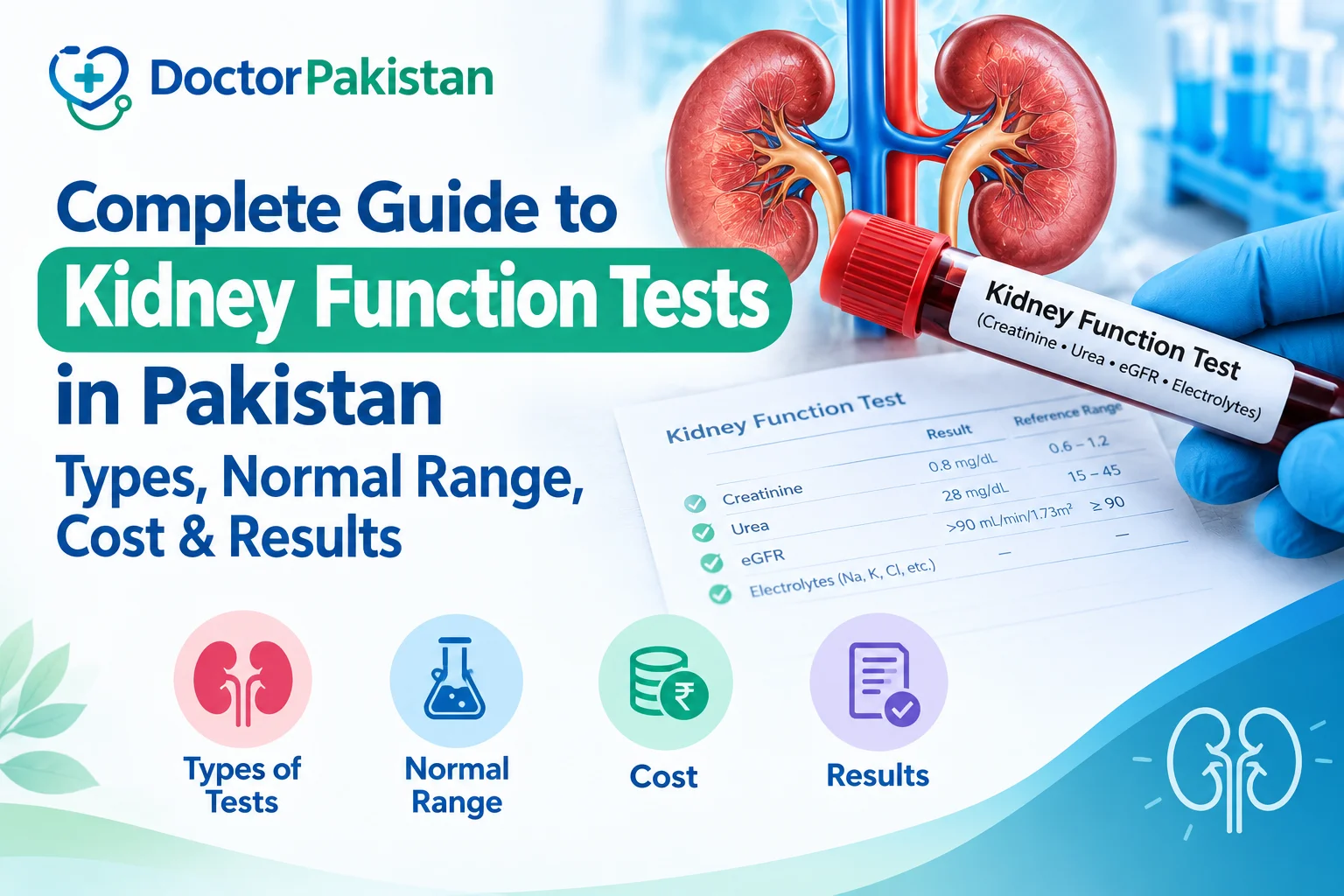
Kidney Function Tests in Pakistan – Complete Guide
Kidney function tests help check how well the kidneys are working and can detect signs of kidney disease, infection, or other health problems. This guide explains common kidney function tests, preparation, normal ranges, possible results, and estimated test costs in Pakistan.
What Are Kidney Function Tests?
Kidney function tests are blood and urine tests used to evaluate how well the kidneys are filtering waste products and maintaining the body's fluid and chemical balance. These tests can help doctors identify possible kidney problems and monitor existing kidney conditions.
Common Kidney Function Tests
Serum Creatinine Test
The serum creatinine test measures the level of creatinine in the blood. Creatinine is a waste product produced by normal muscle activity and is normally removed from the body by the kidneys.
Blood Urea Nitrogen (BUN)
The BUN test measures the amount of nitrogen in the blood that comes from urea. Urea is produced when the body breaks down proteins and is normally removed through the kidneys.
Estimated Glomerular Filtration Rate (eGFR)
eGFR estimates how efficiently the kidneys filter blood. It is usually calculated using the creatinine level along with factors such as age and sex.
Urine Routine Examination
A routine urine test can check for abnormalities such as protein, blood, glucose, bacteria, and other substances that may provide information about kidney or urinary tract health.
Urine Protein Test
This test checks whether excess protein is present in the urine. Persistent protein in urine may be associated with kidney damage and may require further evaluation.
Urine Albumin-to-Creatinine Ratio (ACR)
The urine ACR measures the amount of albumin compared with creatinine in a urine sample. It can help detect small amounts of protein loss through the kidneys, particularly in people at risk of kidney disease.
Why Are Kidney Function Tests Done?
Doctors may recommend kidney function tests when a person has symptoms or risk factors that could be associated with kidney problems. These tests may also be used to monitor an existing condition or check whether treatment is affecting kidney function.
Common reasons for testing include:
- Swelling in the feet, ankles, hands, or around the eyes
- Changes in urination
- Blood in the urine
- High blood pressure
- Diabetes
- Persistent fatigue
- Known kidney disease
- Family history of kidney problems
- Monitoring certain medicines that may affect kidney function
- Serum Creatinine: The reference range varies by laboratory and individual characteristics.
- BUN: The normal range varies depending on the laboratory's testing method.
- eGFR: An eGFR of 90 or above is generally considered within the normal or high range in many adults, although interpretation depends on the overall clinical picture.
- Urine ACR: Lower levels are generally preferred, while persistently elevated albumin levels may require further evaluation.
- Swelling in the legs, feet, hands, or face
- Significant changes in urination
- Blood in the urine
- Persistent tiredness
- Shortness of breath
- High blood pressure
- Persistent nausea or loss of appetite
Kidney Function Test Preparation
Preparation depends on the specific test being performed. Many routine kidney function blood and urine tests do not require fasting.
However, some tests may have specific instructions. Patients should follow the instructions provided by their doctor or laboratory. It is also important to inform the healthcare provider about medicines, supplements, and existing medical conditions.
Do not stop taking prescribed medicines unless your doctor specifically advises you to do so.
Kidney Function Test Normal Range
Normal ranges can vary between laboratories and may also depend on age, sex, muscle mass, hydration, and other health factors.
Commonly reported kidney-related measurements include:
A single abnormal result does not necessarily mean that a person has kidney disease. Doctors usually consider symptoms, medical history, repeat testing, and other test results before reaching a conclusion.
What Do Abnormal Kidney Function Test Results Mean?
Abnormal results can have different causes depending on which test is affected.
For example, an elevated creatinine level may occur when kidney filtration is reduced, but it can also be influenced by factors such as dehydration, muscle mass, certain medicines, or other medical conditions.
Similarly, an abnormal BUN level does not automatically indicate kidney disease. Dehydration, diet, and other health conditions can affect the result.
A lower-than-expected eGFR may indicate reduced kidney filtration, particularly when the finding persists over time. Doctors may recommend repeat testing or additional investigations when necessary.
Kidney Function Test Cost in Pakistan
The cost of kidney function testing varies across Pakistan depending on the laboratory, city, individual test, and whether a patient chooses a single test or a complete kidney function panel.
Common tests such as creatinine, BUN, urine examination, and eGFR may be available separately or as part of a laboratory package.
Because laboratory prices can change, patients should confirm the latest test price directly with their selected laboratory before visiting.
Where Can Kidney Function Tests Be Done in Pakistan?
Kidney function tests are available at many diagnostic laboratories and hospitals across Pakistan. Availability, sample collection methods, reporting time, and prices may differ between locations.
Patients should choose a reputable laboratory and follow its sample collection instructions carefully.
How Long Does It Take to Get Kidney Function Test Results?
The reporting time depends on the laboratory and the specific test. Many routine blood and urine tests may be reported on the same day or within a short period, while some specialized tests can take longer.
Patients should ask the laboratory about the expected reporting time when submitting the sample.
When Should You See a Doctor?
You should discuss abnormal kidney test results with a qualified healthcare professional, particularly if you also have symptoms such as:
Seek medical attention promptly if symptoms are severe or suddenly worsen.
Frequently Asked Questions
Do kidney function tests require fasting?
Many routine kidney function tests do not require fasting. However, preparation requirements can vary depending on the tests ordered, so patients should follow their laboratory or doctor's instructions.
Which test is most commonly used to check kidney function?
Serum creatinine and eGFR are commonly used to assess kidney filtration. Urine tests can provide additional information about kidney health.
Can kidney function tests detect kidney disease?
Kidney function tests can provide important information about kidney health and may help identify possible kidney problems. Additional tests may be needed to determine the underlying cause.
Can I drink water before a kidney function test?
For many routine kidney blood and urine tests, drinking normal amounts of water is generally acceptable. However, patients should follow any specific instructions provided by their doctor or laboratory.
Are abnormal kidney test results always serious?
Not necessarily. Results can be affected by hydration, medicines, diet, muscle mass, and other factors. A doctor should interpret abnormal results in the context of the patient's overall health.
How often should kidney function tests be done?
The frequency depends on a person's health, risk factors, existing kidney conditions, and doctor's recommendations. People with diabetes, high blood pressure, or known kidney problems may require regular monitoring.